

Immortality by Milan Kundera
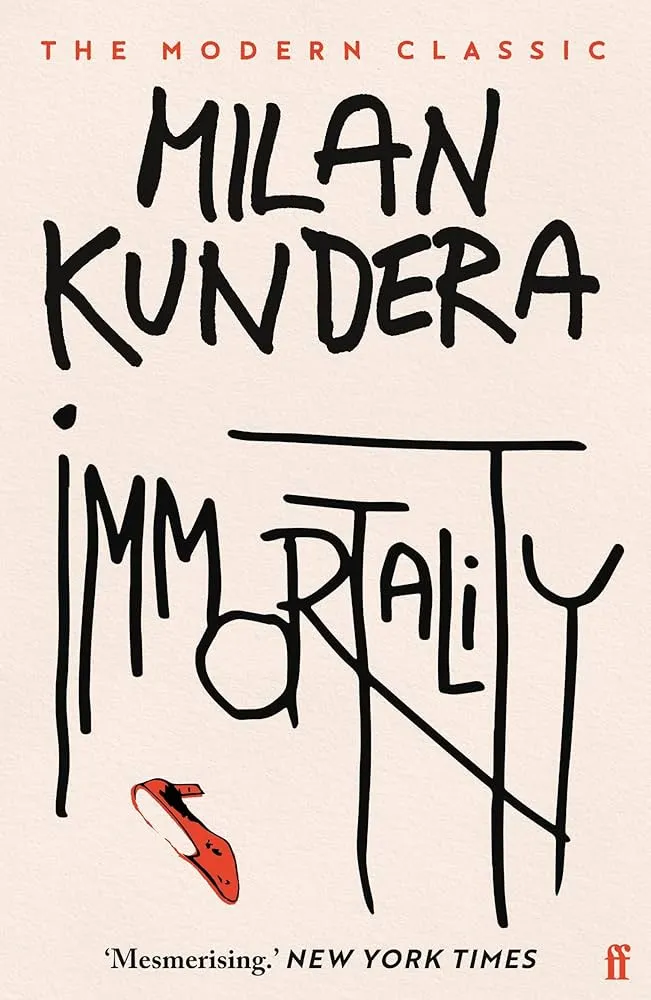
We were a small gathering on a warm, languid evening, the kind that invites unhurried conversation. Yet the mood turned brisk when the book was raised.
Most of the group received it coolly; words such as contrived, uninspiring, and boring were offered without hesitation. I could not help but feel they were mistaking subtlety for artifice, irony for emptiness.
To me, the novel was exquisitely written, romantic in spirit and touched with an old-fashioned elegance that felt both deliberate and sincere. Where they found affectation, I found reflection; where they saw detachment, I sensed quiet longing.
The discussion itself became a spectacle, animated, witty, and delightfully prolonged. No one seemed eager to surrender the evening. At one point, comparisons to Kafka surfaced, as though we were attempting to situate Kundera within a lineage of European introspection and existential playfulness.
And so, dear reader, the verdict rests with you. Was the group correct in their severity, or does the novel possess the fragile, enduring charm I perceived?
Our rating 3 1/2 of 5