
He Carried the Bookshelves Himself: How Amar Chitra Katha Grew From a Local Hero Into a Global Icon
He Carried the Bookshelves Himself: How Amar Chitra Katha Grew From a Local Hero Into a Global Icon
If you grew up in an Indian household, or spent enough time around one, chances are you will remember the distinctive covers: bold, colourful illustrations featuring gods, kings, freedom fighters and folk heroes, sitting on shelves alongside the familiar spines of Western comics.
This is Amar Chitra Katha. For nearly 60 years, it has been telling the stories of India, one comic panel at a time.
We recently sat down with Reena Puri, Editor of Amar Chitra Katha, to hear the story behind the brand and discover what almost six decades of publishing have taught the company along the way.
Founded in 1967, its name captures its purpose perfectly. Amar Chitra Katha translates as “immortal picture stories.” Created primarily for readers between the ages of eight and sixteen, the comics reach children at a time when they are beginning to form their understanding of the world. The aim was to ensure that Indian history, mythology and culture formed part of that picture.
Almost six decades later, that mission feels more relevant than ever.
Why It Started
During the 1960s, Indian children reaching for comics were often choosing Archie, Superman and other Western imports. There was nothing wrong with enjoying these stories, but an entire generation was becoming familiar with Riverdale and Metropolis while knowing comparatively little about India’s own mythology, history and folklore.
Founder Anant Pai recognised the opportunity within this gap.
At the time, comics were often regarded by parents as a distraction or even as an unwelcome foreign influence. Rather than resisting the format, Pai embraced it. If comics were what children wanted to read, why not use them to introduce young readers to the stories of their own heritage?
This simple shift in thinking became the founding mission of Amar Chitra Katha: to use a format children already loved to bring them closer to their history and culture.
An Artistic Style for Every Story
One of the qualities that makes Amar Chitra Katha instantly recognisable is the way its artistic style changes according to the subject. This was not accidental. It was a carefully considered editorial decision that shaped the comics from the beginning.
Fables and folktales receive a lighter, more playful cartoon style that complements their humour and moral lessons.
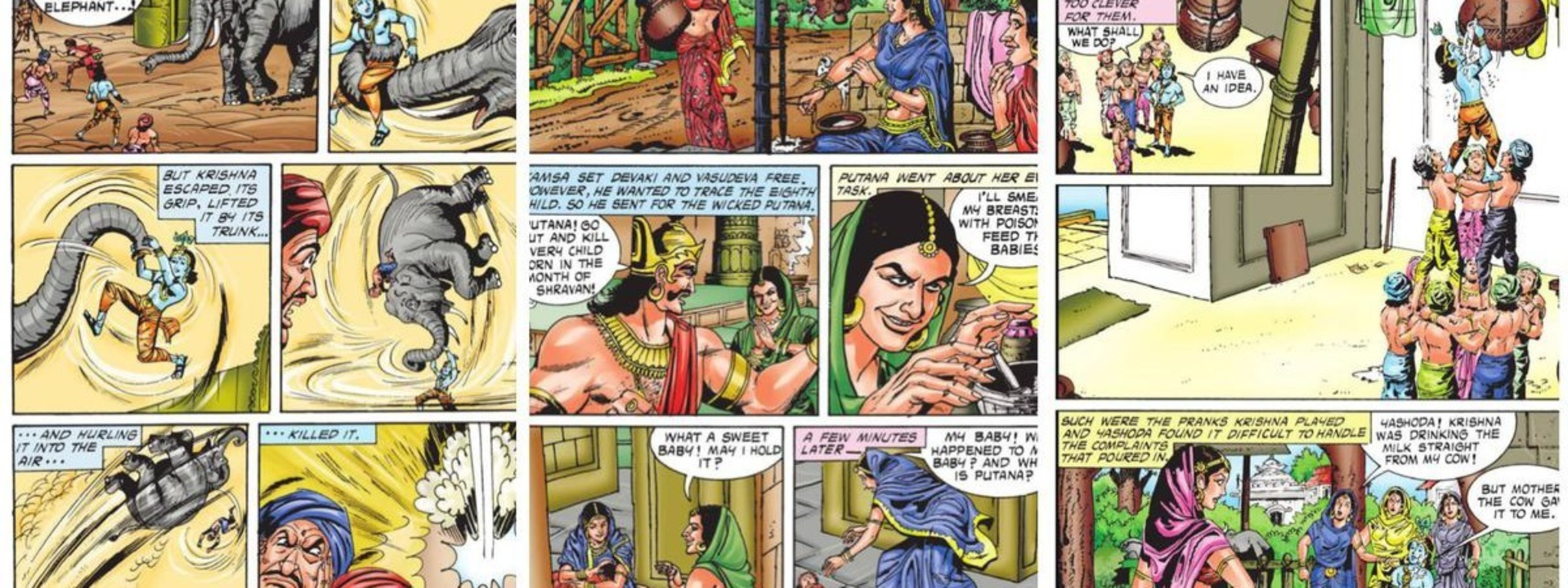
Mythological stories are illustrated in a semi realistic style. The images feel grounded and accessible while remaining respectful in their depiction of divine figures.
Biographies of Gandhi and other historical figures use a more realistic style, giving the lives of real people the seriousness and significance they deserve.
For much of the company’s history, the production process was entirely manual. Its artists worked with a distinctive palette of 26 colours, helping to create the visual identity for which the comics became known.
The determination behind the company extended far beyond the drawing board.
Sales were slow during the early years. The concept was unfamiliar, and demand had yet to develop. Anant Pai responded by personally visiting bookstores and introducing booksellers to the comics.
The problem was not necessarily that booksellers did not want them. Many simply had no shelf space available for a new publication. Pai therefore arrived with his own solution. He carried bookshelves into the stores and assembled them himself, ensuring that the comics were visible to customers and had a genuine opportunity to sell.
It is the kind of resourcefulness and personal determination that can easily be forgotten once a brand becomes an institution. Yet this is quite literally how Amar Chitra Katha earned its place on bookstore shelves.
From Local Bookshelves to Global Readers
What began as a response to a particular cultural need in India has grown into a truly international publishing project.
Amar Chitra Katha comics have been translated into 36 languages. These include Indian regional languages as well as international languages such as Swahili, Bahasa Indonesia, French, German and Chinese.
This remarkable reach demonstrates the enduring strength of the stories themselves. Mythology, folklore and history can travel across cultures and generations when they are told thoughtfully and with care.
Almost Sixty Years of Storytelling
Nearly six decades after its founding, Amar Chitra Katha remains a rare example of a media company created to address a cultural need, rather than simply fill a gap in the market.
The company is also continuing to develop its digital presence and improve its website. Its goal is to make articles and stories easier to discover and read while maintaining a smooth shopping experience for visitors who wish to purchase the comics.
Amar Chitra Katha was built on the understanding that stories help children discover who they are and where they come from.
Almost 60 years later, it is still carrying those stories into bookstores, homes and new generations of readers around the world.