
Every Street Sign Is a Story: In Conversation with KD Greaves
Every Street Sign Is a Story: In Conversation with KD Greaves
What does a street sign have to do with learning to read? Quite a lot, according to Karen Greaves (author name: KD Greaves). Karen is a member of LiteraryWorld, so you can connect with her directly on the platform.
Karen is a former primary school teacher, now an English tutor and children’s writer. During her teaching career, she taught classes throughout the primary school age range, plus pre-school, and used her experience as a springboard into tutoring and children’s writing. Running through all of it is one great passion: the importance of reading.
Learning through laughter and play
Karen contributed to the Early Years education textbook ‘The Brain That Loves to Laugh’ by Dr Jacqueline Harding, a follow-up to Dr Harding’s book, ‘The Brain That Loves to Play’. The idea behind both is simple but powerful: as the books explain, when children play with and enjoy stories, the brain releases endorphins, and learning becomes a joy rather than a chore.
Play, Karen explained, gives children invaluable skills. It teaches them to solve problems, create images in their minds, build relationships, and make decisions. Above all, it gives them the ability to travel in their minds.
Books that ask “What if?”
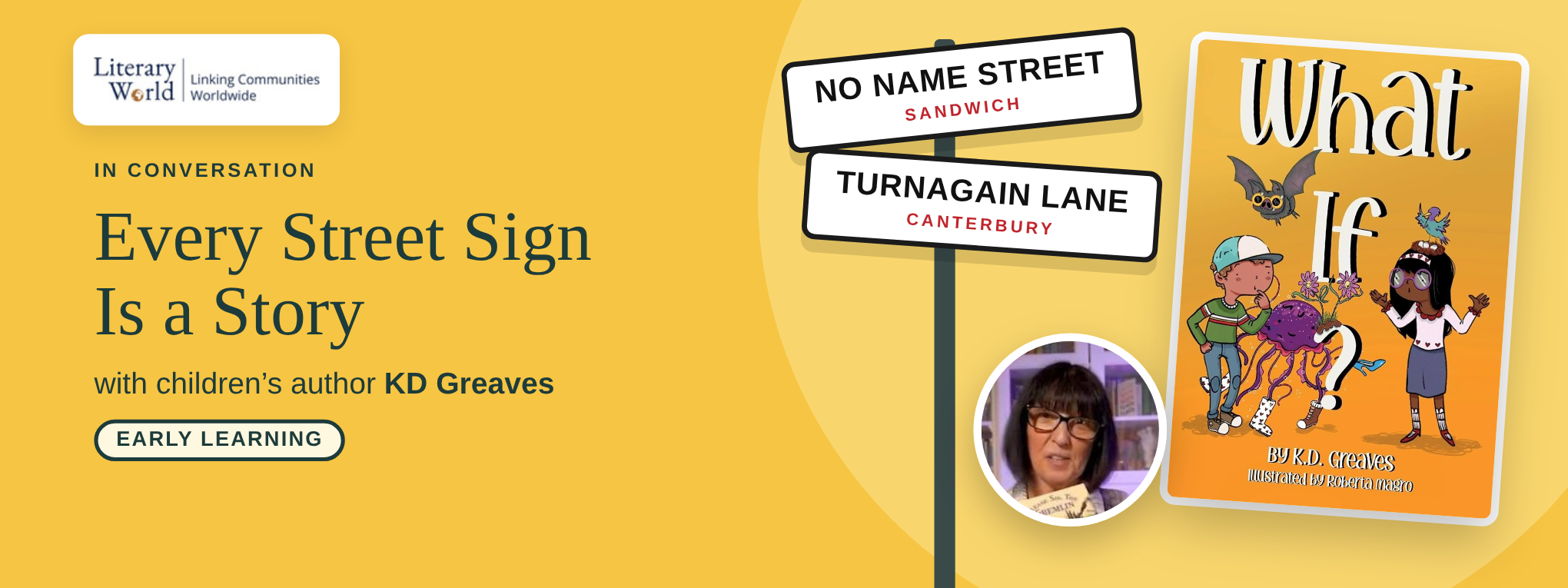
Karen creates interactive books, such as ‘What If?’, designed to spark conversation and stimulate young brains. Rather than giving children one right answer, she wants them to form their own opinions and develop critical thinking skills.
These are foundation skills that last a lifetime. The child who learns to discuss a story, listen to others and defend an opinion is building the teamwork and thinking skills they will one day bring to work.
Reading is more than words
One of my favourite moments in our conversation was when Karen reminded me that reading is a broad word. We read body language. We read a room and its mood. We read our surroundings.
Karen encourages children to read the signs in their own streets and ask what their local environment can teach them. Why does Sandwich have a road called No Name Street? Why is there a Turnagain Lane in Canterbury? Every street sign can become the start of a story.
Seeing through a child’s eyes
Karen gives children storytelling tools so they can create stories of their own. And when she writes for children herself, she sees the world through a child’s eyes. In a picture book, she says, the pictures and the words need to fit together tightly.
For Karen, the best writers are those who have held on to the skill of playing. Play lets them see the vision first, and the words follow.
The right book for the right child
Karen’s mission fits LiteraryWorld beautifully. She believes children need to try many different genres of books, because the right book has to find the right child. If it doesn’t, children risk losing their love of reading before it has had a chance to grow.
In 2027, she will lead a workshop for students taking Early Childhood Studies at Middlesex University on this very topic, helping a new generation of teachers bring the joy of reading into their classrooms.
On Karen’s bedside table
Karen is currently rereading ‘Cider with Rosie’ by the English writer Laurie Lee, and ‘The Island at the Edge of Night’ by Lucy Strange.
Passionate about early learning? Join LiteraryWorld and our Early Learning group, where parents, teachers, and children’s authors share ideas like these: https://literaryworld.com/signup